-
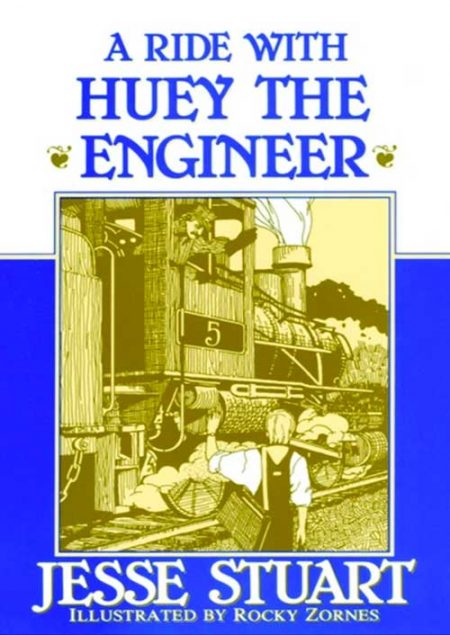 Jesse Stuart Junior Book "What lies in the world outside of Clearwater Valley?" Sunny Logan always wondered. Twice each day, for the two years he had been going to school, he hurried to the railroad tracks. There he could watch Huey the engineer drive his engine No. 5 along the Eastern Kentucky Railroad. Sunny would not miss seeing Huey for anything in the whole world. SOFTBACK By Jesse Stuart
 -
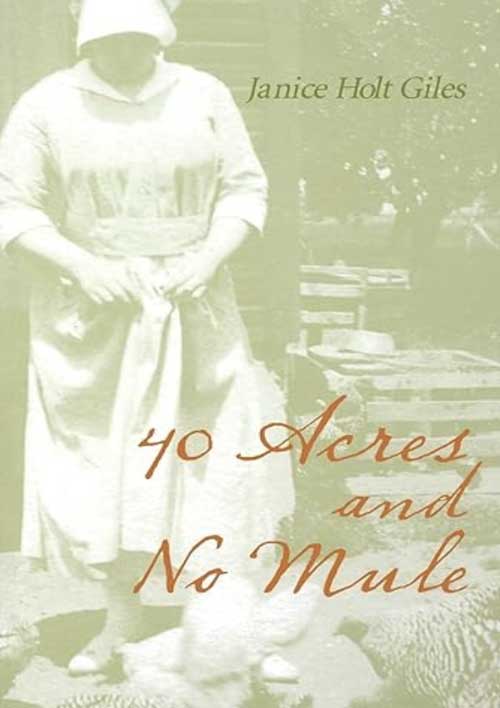 In the late 1940s, Janice and Henry Giles moved from Louisville, Kentucky, back to the Appalachian hill country where Henry had grown up and where his family had lived since the time of the Revolution. With their savings, the couple bought a ramshackle house and forty acres of land on a ridge top and set out to be farmers like Henry's forebears. To this personal account of the trials of a city woman trying to learn the ways of the country and of her neighbors, Janice Holt Giles brings the same warmth, humor, and powers of observation that characterize her novels. Enlightening and evocative, personal and universally pertinent, this description of a year of "backaches, fun, low ebbs, and high tides, and above all a year of eminent satisfaction" will be welcomed by Janice Holt Giles's many readers, old and new. Janice Holt Giles (1905-1979), author of nineteen books, lived and wrote near Knifley, Kentucky, for thirty-four years. Her biography is told in Janice Holt Giles: A Writer's Life. SOFTBACK VERSION By Janice Holt Giles
 -
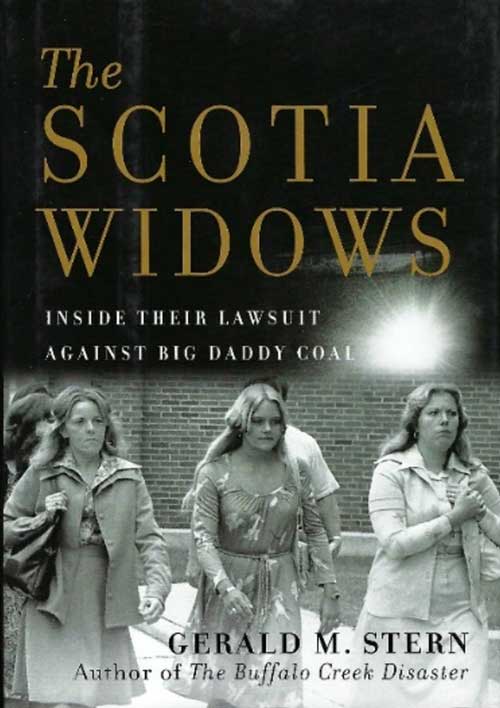 The Scotia Widows: Inside Their Lawsuit Against Big Daddy Coal On March 9, 1976, a violent explosion, fueled by high concentrations of methane gas and coal dust, ripped through the Scotia mine in the heart of Eastern Kentucky coal country. The blast killed fifteen miners who were working nearly three and a half miles underground; two days later, a second explosion took the lives of eleven rescue workers. For the miners’ surviving family members, the loss of their husbands, fathers, and sons was only the beginning of their nightmare. By Gerald M. Stern
 -
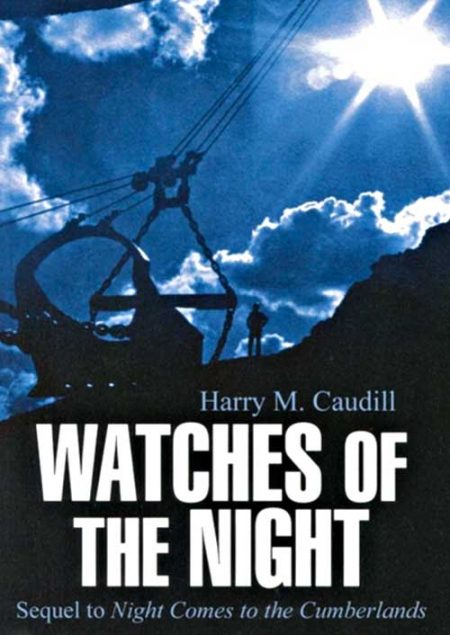 In 1963, Harry M. Caudill published his now classic account of the reckless, deliberate despoliation of the Appalachian Plateau, Night Comes to the Cumberlands. Thirteen years later, in The Watches of the Night, Caudill continued the heartbreaking story of an incredibly rich land inhabited by a grindingly poor people whose problems, despite state and local aid and an unprecedented boom in coal, had worsened: the land was being stripped more rapidly than ever; the people’s traditional relationship with the land was being uprooted, and their old customs eliminated by standardization Both a narrative history and a polemic against greed and waste, The Watches of the Night hammers at “the profligacy growing out of the persistent myth of superabundance.” The author ponders an even darker future if the cycle of boom and bust is not broken. He writes: “Americans have never understood or respected the finely textured, little-hill terrain of the Cumberland Plateau.” Neither the farmers nor the miners who followed the early pioneers saw it as a place cherish. Through decades that have lengthened to nearly two centuries the land has fought back, sometimes with savage floods and always with persistent efforts to reforest. “But now times runs out and our “inexhaustible” resources have turned finite….The Kentucky Cumberlands are many things, but most of all they are a warning.” By Harry M. Caudill
 -
 Authors represented in Appalachian Love Stories include:
- Jesse Stuart
- Ancella R. Bickley
- James M. Gifford
- Jimmy Lowe
- James B. Goode
- Edwina Pendarvis
- Laura Treacy Bentley
- Bruce Radford Richey
- Ina Everman
- Danny Fulks
- Loyal Jones
- Billy C. Clark
- Linda Scott DeRosier
- Christina St. Clair
- Alexandra Combs Hudson
- Kate Larken
- Barbara Smith
- Carol Van Meter
-
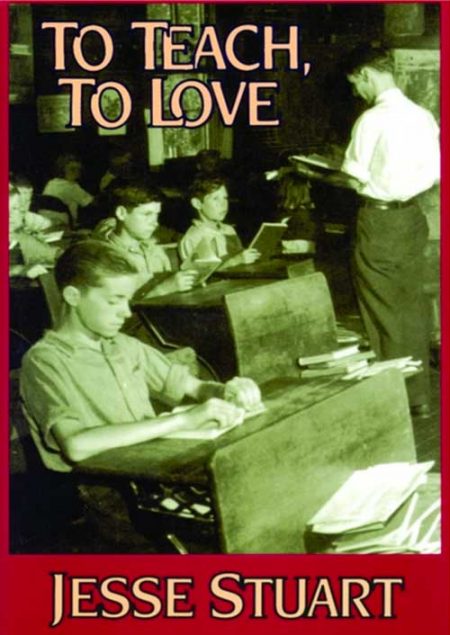 Stuart's autobiographical account of much of his educational career. This great Kentucky novelist, short story writer, poet, and teacher writes about his boyhood, his elementary school and high school experiences, and his days at Lincoln Memorial University. He tells of teaching in a one room rural schoolhouse, his experiences as a county school superintendent, and his stay as a teacher at American University in Cairo, Egypt. He explains what classroom methods worked best, and why, and speculates on what has gone wrong with American schools. By Jesse Stuart
 -
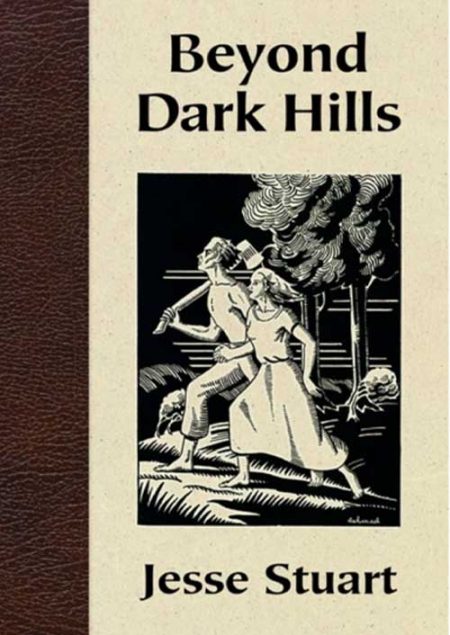 Jesse Stuart began this book in 1932 at Vanderbilt University as a paper for an English professor who asked his seminar students to turn in a maximum of 18 typewritten ages. In the 11 days allotted for the assignment, Stuart crammed 322 pages with the story of his young life. These ageless, universal experiences were told by a vibrant, precocious young man who became one of the most widely read American authors of the 20th century. For the young reader who has yet to experience the transition from childhood to adulthood, this book can be an inspiring guide. For older readers, it may be a beautiful trip down memory lane. HARDBACK By Jesse Stuart
 -
 Winning of the West: Book 3 Gold Fever focuses upon the early phase of the Gold Rush era, beginning in early 1848 and concluding in September, 1849. Allan Eckert, a widely admired historian, relates in compelling detail the intriguing chain of developments in this great national obsession, including the following profoundly influential ones:
- Gold's initial discovery
- The early-spring local gold rush
- The entire country's evolving response to the California gold rumors
-
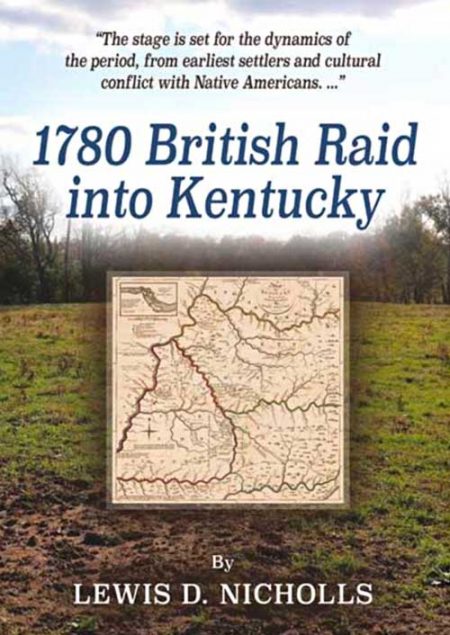 In 1780, the British launched a raid into Kentucky led by Captain Henry Bird to assist the Native Americans to reclaim their hunting grounds from white settlers. The raid targeted Kentucky's Ruddell's Fort and Martin's Station and captured approximately 350 white settlers comprised of men, women, and children. On June 26, 1780, the British and Native Americans marched the captives to Detroit on a 50-day march under brutal conditions, killing several of them along the way. The British marched 129 of these settlers, who were eventually released after the war of escaped. The remaining settlers held by the Native Americans were sold into slavery, adopted into a tribe, sold or eventually released. SOFTBACK VERSION Lewis D. Nicholls
 -
 As with his novels, many of Robert Morgan’s short stories let characters, often women, tell their own stories. Morgan’s earliest publications were short stories, and over six decades he has continued to produce short fiction, along with novels, poetry, essays, and biographies. He has said the short narrative is the most challenging genre, requiring the concision and precision of a poem with the drama and implied character insights of longer fiction. These stories reflect the distinctive features of his poetry, vivid, lyrical, evoking a particular place. Morgan has found the culture and land of the southern Appalachians especially suited to expression in poetry and short fiction, the beauty of the ridges and valleys, the unique history, the laconic speech of the people, intense bonds of family and community, the storytelling gifts, and long memories. Gathered from five previous volumes of short fiction, Uplands proves greater in impact than the sum of its individual pieces. HARDBACK VERSION (320 PAGES) Robert Morgan
 -
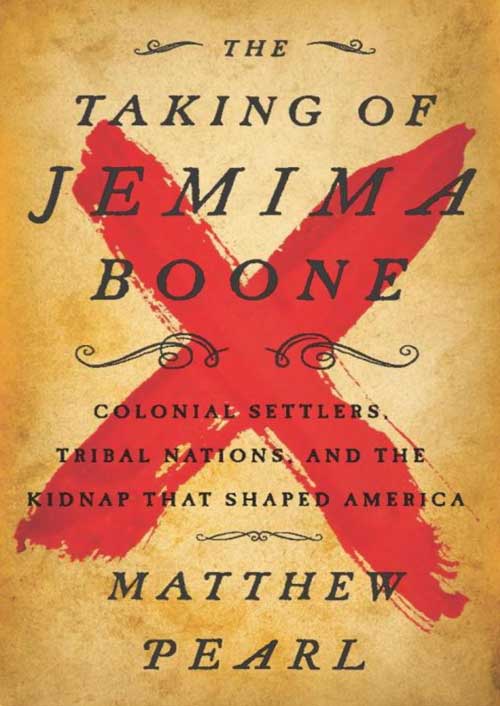 In his first work of narrative nonfiction, Matthew Pearl, bestselling author of acclaimed novel The Dante Club, explores the little-known true story of the kidnapping of legendary pioneer Daniel Boone’s daughter and the dramatic aftermath that rippled across the nation. On a quiet midsummer day in 1776, weeks after the signing of the Declaration of Independence, thirteen-year-old Jemima Boone and her friends Betsy and Fanny Callaway disappear near the Kentucky settlement of Boonesboro, the echoes of their faraway screams lingering on the air. A Cherokee-Shawnee raiding party has taken the girls as the latest salvo in the blood feud between American Indians and the colonial settlers who have decimated native lands and resources. Hanging Maw, the raiders’ leader, recognizes one of the captives as Jemima Boone, daughter of Kentucky's most influential pioneers, and realizes she could be a valuable pawn in the battle to drive the colonists out of the contested Kentucky territory for good. With Daniel Boone and his posse in pursuit, Hanging Maw devises a plan that could ultimately bring greater peace both to the tribes and the colonists. But after the girls find clever ways to create a trail of clues, the raiding party is ambushed by Boone and the rescuers in a battle with reverberations that nobody could predict. As Matthew Pearl reveals, the exciting story of Jemima Boone’s kidnapping vividly illuminates the early days of America’s westward expansion, and the violent and tragic clashes across cultural lines that ensue. In this enthralling narrative in the tradition of Candice Millard and David Grann, Matthew Pearl unearths a forgotten and dramatic series of events from early in the Revolutionary War that opens a window into America’s transition from colony to nation, with the heavy moral costs incurred amid shocking new alliances and betrayals.. HARDBACK VERSION Matthew Pearl
 -
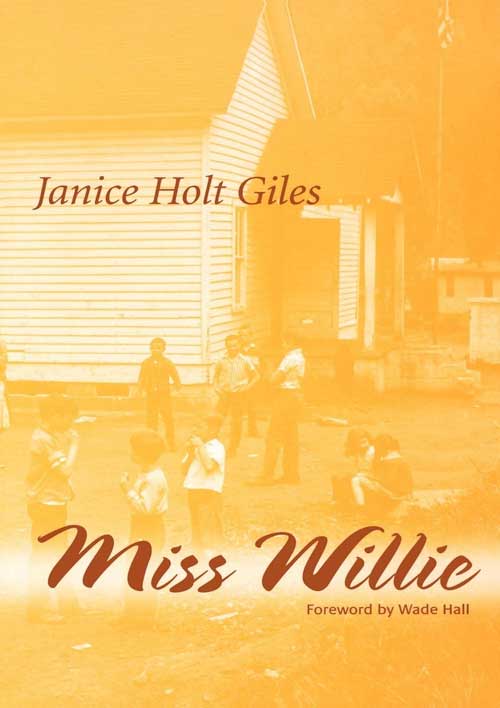 Miss Willie, first published in 1951, is part of Giles's Piney Ridge Trilogy. It tells the story of an earnest teacher who moves to the hills of Kentucky to teach in a one-room schoolhouse. Zealously, she tries to change the ways of the stubborn and proud Appalachian people, but to no avail. They listen to her ideas about sanitation and other foolishness because to argue would be rude. But in the end they quietly go about their accustomed ways. Ultimately, Miss Willie realizes that the hill customs have a beauty and dignity of their own and that some of her efforts to reform them were ill-conceived. Her warmth, generosity, and humor help her bridge the gap and find fulfillment in Piney Ridge. This is a story of reconciliation and the coming together of two different ways of life. Above all, it is a story of people and of the land to which they belong. SOFTBACK VERSION By Janice Holt Giles

