-
 Historians tend to tell our history through the lives of famous people, and certainly biographies and autobiographies play an important role in understanding Kentucky history. However, since history is the sum total of all human experiences, the lives of everyday people should shape our history, too. That’s why memoirs like the one presented here by Harry J. Rust are so important. Harry grew up on a farm in Campbell County in northern Kentucky, and, more than eight decades later, he still lives in that same area. His story of family life covers four generations. It is a strong contribution to our understanding of the hardworking middle class that has made America a great nation – a middle class that is beginning to appear more frequently in Kentucky and Appalachian memoirs. It is an important remembrance that neither exploits nor exaggerates the difficulties of rural life in Kentucky. It is a rich tapestry of the work, emotions, thoughts, and words of a man who represents millions of unrecognized rural people who are the true flesh and blood of history. This book is a valuable contribution to Kentucky history. HARDBACK VERSION Harry J. Rust
 -
 Traveling The Underground Railroad: A Visitor's Guide to More Than 300 Sites describes current private homes, churches, restaurants, and halls in the United States and Canada that once served as Underground Railroad sites, and includes contact information for tourism offices and historical societies. SOFTBACK VERSION By Bruce Chadwick
 -
 A Collection of essays, short stories, and poetry from writers, including Jesse Stuart, Billy C. Clark, James B. Goode, and Thomas D. Clark. SOFTBACK
 -
 This is a collection of folk tales, or stories based on traditional tales which originated in the Old World before America became a nation. They came to this country in the memories of the settlers and were passed on to younger generations through the oral tradition. However, as the immigrants to America began to change and develop into Americans, so did the characters in the folk tales. SOFTBACK Compiled & Edited by Loyal Jones
 -
 Boston University, the site of the world’s finest repository of 20th Century literature, praises Billy C. Clark as “one of the South’s most distinguished writers.” In this fascinating and highly readable book, Clark, founder and editor of Virginia Writing, writes of his own astonishingly primitive childhood in an Appalachian river town, Catlettsburg, Kentucky, at the junction of the Big Sandy and the Ohio Rivers. Billy C. Clark was a member of a sprawling, ragged family. His father was an intelligent, fiddle-playing shoemaker with little formal education. His mother often took in washing to help provide food for the family. Billy grew up in a derelict house, “The Leaning Tower,” on the banks of the Ohio. Always hungry, often dirty, and without sufficient clothing, he led an adventurous life on the two rivers, swimming, fishing, and salvaging flotsam from the frequent floods. He set trout lines for fish and trap lines for mink and muskrats, and he walked fourteen miles before school to clear his traps. He learned laughter from his magnificent mother and wisdom from his father, who taught him that “poor folks have a long row to hoe….” Billy was the only one of his family to seek an education, and through his traps, his river salvage, and odd jobs, he earned money to put himself through school. The book ends with a powerful account of his parents’ pride at his graduation. Time Magazine said that this book is “as authentically American as Huckleberry Finn.” It is a touching account of a boy and two rivers. It is a must for public and school libraries, or anyone interested in Appalachian history or literature. By Billy C. Clark
 -
 Though there are many biographies of the great Shawnee chief Tecumseh (1768-1813), this effort by historical novelist Allan W. Eckert may spark new interest — and controversy — with its "hidden dialogue" technique. After more than 25 years of research, the author felt free to recreate Tecumseh's conversations and thoughts in what proves to be an entertaining blend of fact and fiction. The orator and organizer's life was shaped by his tribe's tragic confrontation with westward-moving whites, who encroached on Native American lands along the Ohio River valley. His long struggle against this dispossession led Tecumseh to create a historic confederacy of tribes, but this crowning achievement was destroyed by his own brother at Tippecanoe in 1811. SOFTCOVER By Allan Eckert
 -
 In the year 1771, a white boy named Marmaduke Van Swearingen was captured by the Shawnee Indians in what is now West Virginia, but was then the edge of the American frontier. Impressed with his bravery, he was not killed but instead was taken to Ohio where he was adopted into the tribe and given the name Blue Jacket, from the blue shirt he was wearing at the time of his capture. Eckert has taken all of the known facts of Blue Jacket's life and has woven them into a narrative of compelling interest, with a very different perspective on the way America was settled. The reader will learn what life was really like on the dangerous frontier wilderness that was West Virginia, Kentucky and Ohio before the Revolutionary War. By Allan Eckert
 -
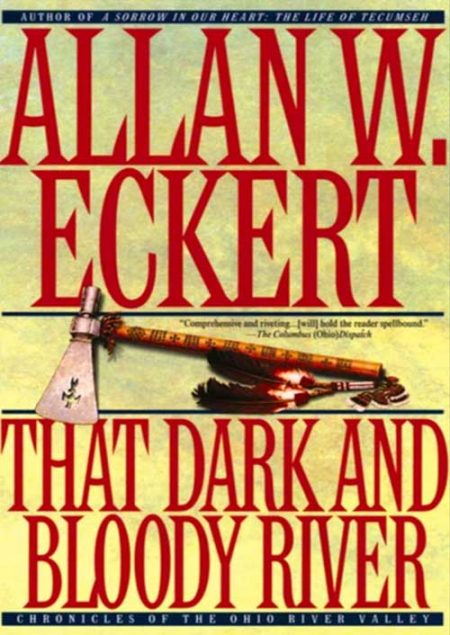 The Ohio River, a principal route for pioneers pushing westward along its 981-mile course from Pennsylvania through Kentucky and Indiana to Illinois, was the scene of fierce battles among warring Indian tribes, Shawnee, Miami, Cherokee, Iroquois, etc., and between Native Americans and white settlers. Tapping journals, letters, diaries and government memoranda from 1768 to 1799, and fleshing out his panoramic chronicle with reconstructed dialogue adapted from primary sources, historian-novelist Eckert has fashioned an epic narrative history of the struggle for dominance of the Ohio River Valley that makes compelling reading. The lives of notable pioneer families (Zanes, Bradys, Wetzels), incursions of traders, explorers, colonists, adventurers and the historic exploits of George Washington, Daniel Boone, George Rogers Clark and others intersect. SOFTBACK By Allan Eckert
 -
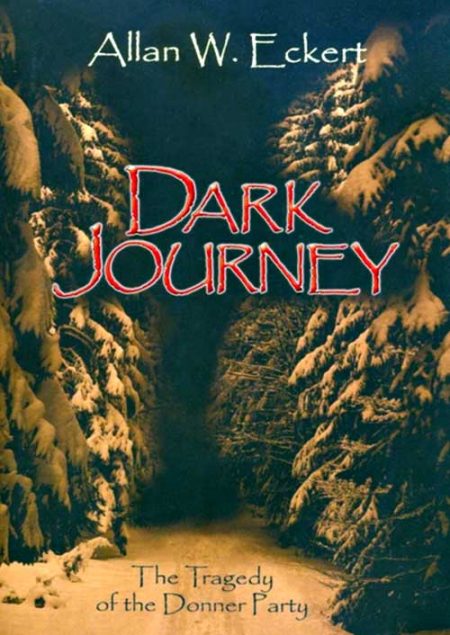 Winning of the West: Book 1 This riveting book may well be the most historically accurate and detailed telling of the 1846-47 Donner-Reed Party's traumatic journey to California. Of the hundreds of wagon trains traveling west, only the Donner Party left an indelible imprint on our national imagination, the wagon trains fame sealed by its terrible fate. Eckert's masterful telling brings alive the Donner Party's 88 members and the fates of the eleven families and numerous single men who risked all, of whom just 51 survived. He enriches the compelling tale with vivid descriptions of the colorful characters, both in the party and among those they met: mountain men, native peoples both hostile and helpful, and more. This poignant and dramatic account provides a rigorously accurate and comprehensive telling of one of America's great pioneer sagas. SIGNED HARDBACK By Allan Eckert
 -
Sale!

"Nothing is impossible to a determined woman."
This quote by Louisa May Alcot adorns a beautiful tote bag available at the Jesse Stuart Foundation. This large, 100 percent cotton bag is more than 16 inches deep, and it will handle books, bottles, groceries, mail and anything else you choose to carry. The bag normally retails for $35.00. You can purchase it for $28.00 on this website. It will make a meaningful gift to the "determined woman" in your life. -
 Growing Up in the Last Small Town: A West Virginia Memoir is a humorous and poignant account of Bob Barnett, a bad student and undersized athlete coming of age in the 1950’s, but it is also the story of all of us who grew up in small towns across America between 1940 and 1960. It was a time of simple pleasures that included shedding winter coats on the first day of spring, playing baseball until dark, watching four-hour children’s matinees on Saturday, and breaking plates in the town dump, our favorite playground. It was a time when we wrote term papers, ate fish sandwiches at the Fireman’s Carnival, cheered our high school teams, and lived for soak hops and dances –a time when getting the right date for the prom was more important than the election of the president. The story is set in the unincorporated pottery town of Newell, West Virginia and captures the rhythm of life in small towns that we thought would never change. But change came quickly. Television became a staple of modern life in the 1950s offering Elvis, the evening news, and a vivid view of our changing world. School consolidations robbed the towns of their souls, supermarkets eliminated the need for corner grocery stores, and the closing of mills and factories brought an end to small towns as we knew them. The generation whose story is told in this book grew up in the last small town in America. SOFTBACK By Bob Barnett
 -
 Taps for Private Tussie won the Thomas Jefferson Southern Award in 1943, and was a Book-of-the-Month Club selection that year, also. This tale about the Tussie family is a brimming mountain spring of hilarious fun and folklife. Yet never was a book read more eagerly to see what in the world will happen next. This tale is not just a story of poor white Southern mountaineers on relief. There is something universal about it. It reveals an attitude towards human life and its problems, found in people, places, and times that have no connection with Southern mountaineers. By Jesse Stuart
 -
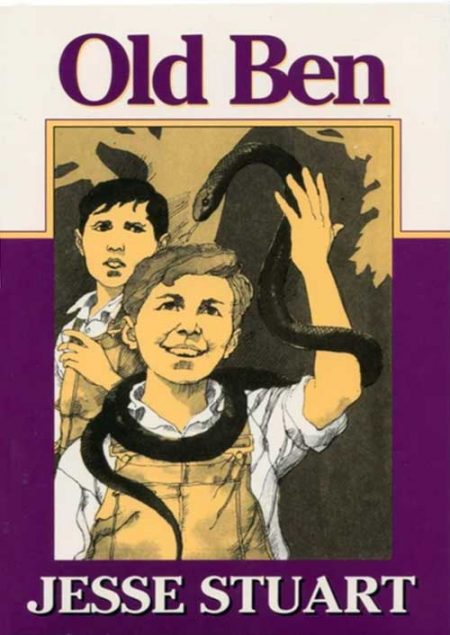 Jesse Stuart Junior Book By Jesse Stuart
 -
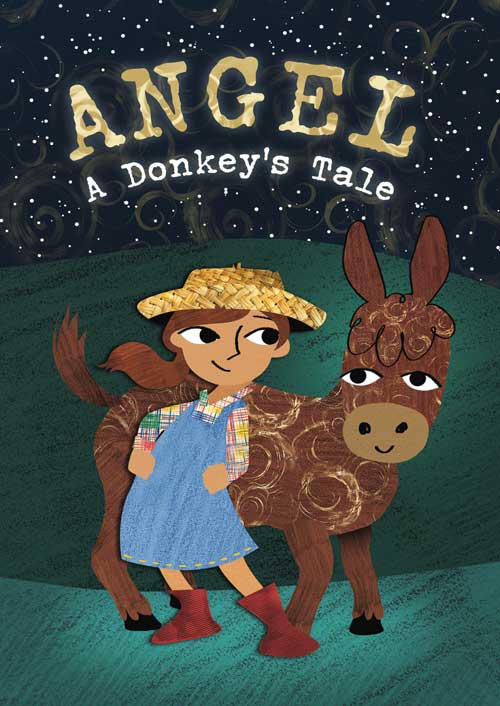 Written and created by Joan Litteral, Angel: A Donkey's Tale is a full color, fully illustrated children's book. Illustrations by Evan and Joe Kovach. HARDBACK VERSION Joan Litteral
 -
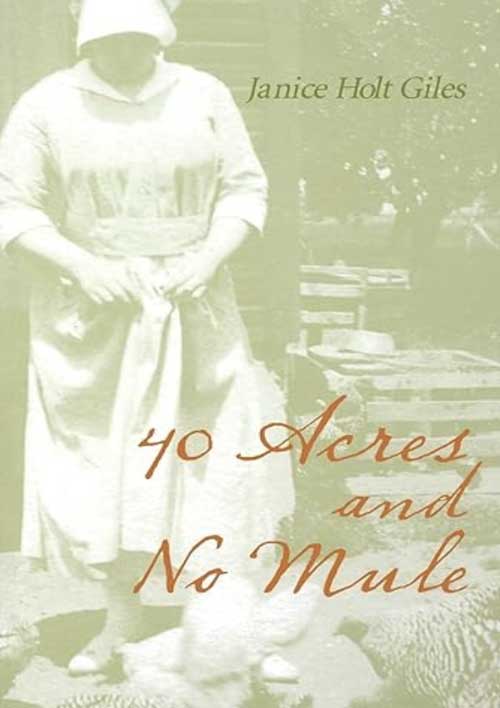 In the late 1940s, Janice and Henry Giles moved from Louisville, Kentucky, back to the Appalachian hill country where Henry had grown up and where his family had lived since the time of the Revolution. With their savings, the couple bought a ramshackle house and forty acres of land on a ridge top and set out to be farmers like Henry's forebears. To this personal account of the trials of a city woman trying to learn the ways of the country and of her neighbors, Janice Holt Giles brings the same warmth, humor, and powers of observation that characterize her novels. Enlightening and evocative, personal and universally pertinent, this description of a year of "backaches, fun, low ebbs, and high tides, and above all a year of eminent satisfaction" will be welcomed by Janice Holt Giles's many readers, old and new. Janice Holt Giles (1905-1979), author of nineteen books, lived and wrote near Knifley, Kentucky, for thirty-four years. Her biography is told in Janice Holt Giles: A Writer's Life. SOFTBACK VERSION By Janice Holt Giles
 -
 In her Introduction, Glennis Stuart Liles provides some historical background on Greenup and Greenup County and then she focuses on her parents and her family in “W-Hollow Holidays and Holiday Recipes." “My parents, Martha and Mitchell Stuart, married at Plum Grove (Greenup County) and went to house keeping in W-Hollow just over the hill from the town of Greenup. They lived there until they died in the early fifties. They, and their neighbors, grew their vegetables on the rocky hillsides, milked cows, and killed their own meat. Everyone was poor, but they did their best to make holidays special. The most important part of each holiday was the food. It was served in the dining room, on a fancy tablecloth with cloth napkins and their best silverware and china. The recipes in this book are special to the people of W-Hollow. They have been used over and over on special occasions – some for more than one-hundred-fifty years.” HARDBACK VERSION By Glennis Stuart Liles
 -
 The Scotia Widows: Inside Their Lawsuit Against Big Daddy Coal On March 9, 1976, a violent explosion, fueled by high concentrations of methane gas and coal dust, ripped through the Scotia mine in the heart of Eastern Kentucky coal country. The blast killed fifteen miners who were working nearly three and a half miles underground; two days later, a second explosion took the lives of eleven rescue workers. For the miners’ surviving family members, the loss of their husbands, fathers, and sons was only the beginning of their nightmare. By Gerald M. Stern
 -
 Jesse Stuart was a paradox. For a period of his life, Jesse slept with a loaded gun under his pillow, yet he also carried a typewriter with him wherever he went. He courted woman with mud on his boots and pistols on his hips, but he had wildflowers in his hands and envelops completely covered with chicken-scratched poems in his pockets. He was petty yet often kind, mean-spirited but truly helpful to beginning writers, clannish yet hospitable to visitors HARDBACK By James M. Gifford
 -
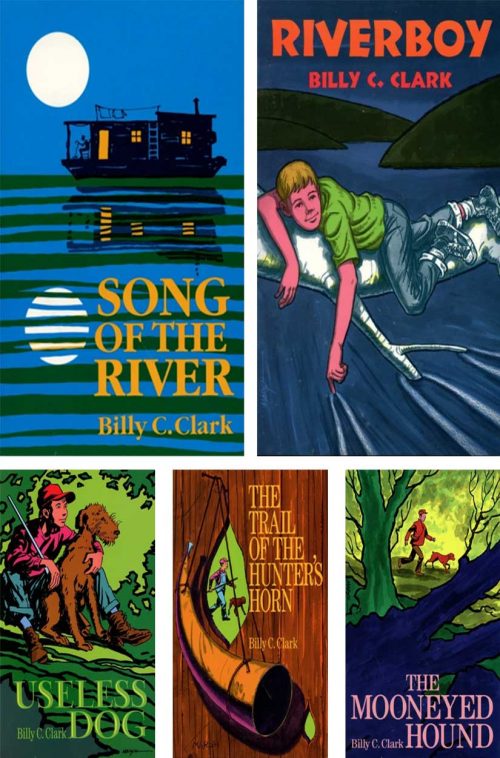
- Song of the River
- The Trail of the Hunter's Horn
- Riverboy
- Useless Dog
- The Mooneyed Hound
-
 Winning of the West: Book 3 Gold Fever focuses upon the early phase of the Gold Rush era, beginning in early 1848 and concluding in September, 1849. Allan Eckert, a widely admired historian, relates in compelling detail the intriguing chain of developments in this great national obsession, including the following profoundly influential ones:
- Gold's initial discovery
- The early-spring local gold rush
- The entire country's evolving response to the California gold rumors
-
 Jesse Stuart Junior Book "What lies in the world outside of Clearwater Valley?" Sunny Logan always wondered. Twice each day, for the two years he had been going to school, he hurried to the railroad tracks. There he could watch Huey the engineer drive his engine No. 5 along the Eastern Kentucky Railroad. Sunny would not miss seeing Huey for anything in the whole world. SOFTBACK By Jesse Stuart
 -
 Jesse Stuart Junior Book Even though he lived on a farm and had had a number of pet animals, Andy Scott had never been able to keep a pet very long. Then Gypsy, the family cow, had a calf. Andy called him Soddy, because he was the color of the plowed clay ground. He hoped to keep the calf as a pet. Andy's father told him Soddy would have to be sold for veal, but Andy was determined to save his new friend and playmate. Filled with love for the calf, yet knowing his parents needed the money, Andy thought of a plan to suit everyone. SOFTBACK By Jesse Stuart
 -
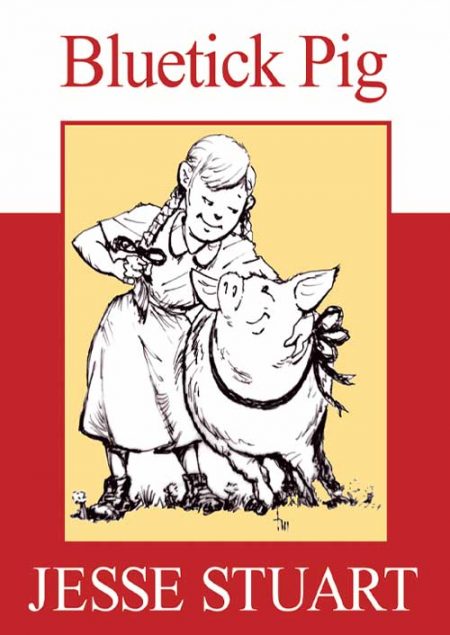 Jesse Stuart Junior Book Sarah Powell had worked a day for her neighbor. For her pay, she was given the choice of a quarter or a little pig who was the runt of the litter. By Jesse Stuart Edited by Cathy R. Roberts
 -
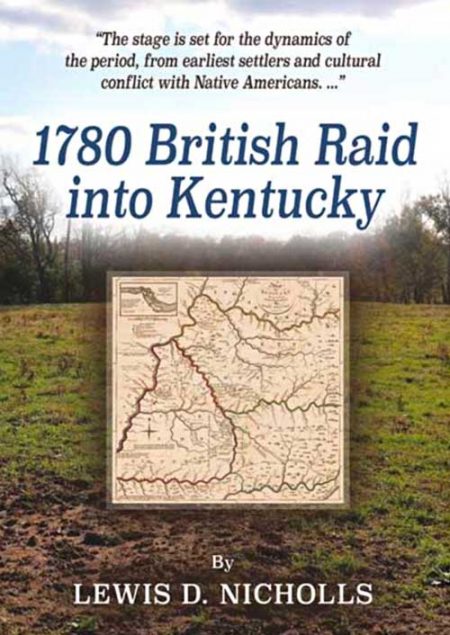 In 1780, the British launched a raid into Kentucky led by Captain Henry Bird to assist the Native Americans to reclaim their hunting grounds from white settlers. The raid targeted Kentucky's Ruddell's Fort and Martin's Station and captured approximately 350 white settlers comprised of men, women, and children. On June 26, 1780, the British and Native Americans marched the captives to Detroit on a 50-day march under brutal conditions, killing several of them along the way. The British marched 129 of these settlers, who were eventually released after the war of escaped. The remaining settlers held by the Native Americans were sold into slavery, adopted into a tribe, sold or eventually released. SOFTBACK VERSION Lewis D. Nicholls
 -
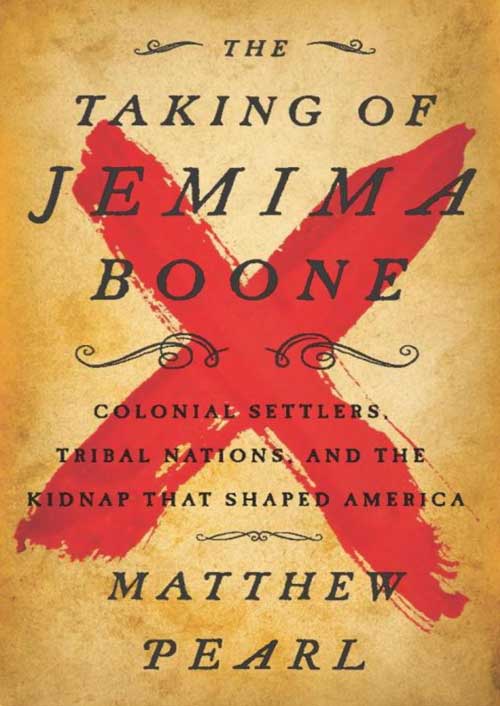 In his first work of narrative nonfiction, Matthew Pearl, bestselling author of acclaimed novel The Dante Club, explores the little-known true story of the kidnapping of legendary pioneer Daniel Boone’s daughter and the dramatic aftermath that rippled across the nation. On a quiet midsummer day in 1776, weeks after the signing of the Declaration of Independence, thirteen-year-old Jemima Boone and her friends Betsy and Fanny Callaway disappear near the Kentucky settlement of Boonesboro, the echoes of their faraway screams lingering on the air. A Cherokee-Shawnee raiding party has taken the girls as the latest salvo in the blood feud between American Indians and the colonial settlers who have decimated native lands and resources. Hanging Maw, the raiders’ leader, recognizes one of the captives as Jemima Boone, daughter of Kentucky's most influential pioneers, and realizes she could be a valuable pawn in the battle to drive the colonists out of the contested Kentucky territory for good. With Daniel Boone and his posse in pursuit, Hanging Maw devises a plan that could ultimately bring greater peace both to the tribes and the colonists. But after the girls find clever ways to create a trail of clues, the raiding party is ambushed by Boone and the rescuers in a battle with reverberations that nobody could predict. As Matthew Pearl reveals, the exciting story of Jemima Boone’s kidnapping vividly illuminates the early days of America’s westward expansion, and the violent and tragic clashes across cultural lines that ensue. In this enthralling narrative in the tradition of Candice Millard and David Grann, Matthew Pearl unearths a forgotten and dramatic series of events from early in the Revolutionary War that opens a window into America’s transition from colony to nation, with the heavy moral costs incurred amid shocking new alliances and betrayals.. HARDBACK VERSION Matthew Pearl
 -
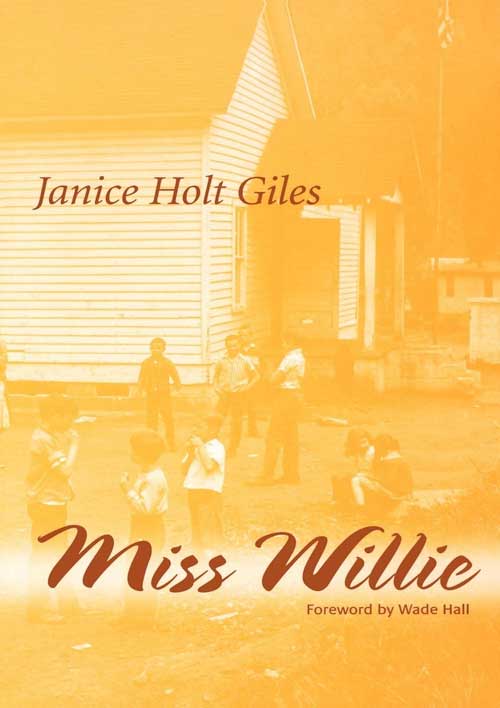 Miss Willie, first published in 1951, is part of Giles's Piney Ridge Trilogy. It tells the story of an earnest teacher who moves to the hills of Kentucky to teach in a one-room schoolhouse. Zealously, she tries to change the ways of the stubborn and proud Appalachian people, but to no avail. They listen to her ideas about sanitation and other foolishness because to argue would be rude. But in the end they quietly go about their accustomed ways. Ultimately, Miss Willie realizes that the hill customs have a beauty and dignity of their own and that some of her efforts to reform them were ill-conceived. Her warmth, generosity, and humor help her bridge the gap and find fulfillment in Piney Ridge. This is a story of reconciliation and the coming together of two different ways of life. Above all, it is a story of people and of the land to which they belong. SOFTBACK VERSION By Janice Holt Giles
 -
 Authors represented in Appalachian Love Stories include:
- Jesse Stuart
- Ancella R. Bickley
- James M. Gifford
- Jimmy Lowe
- James B. Goode
- Edwina Pendarvis
- Laura Treacy Bentley
- Bruce Radford Richey
- Ina Everman
- Danny Fulks
- Loyal Jones
- Billy C. Clark
- Linda Scott DeRosier
- Christina St. Clair
- Alexandra Combs Hudson
- Kate Larken
- Barbara Smith
- Carol Van Meter
-
Out of stock
 This young adult historical novel is based on an exciting and little known incident in the life of the famed Kentucky frontiersman Daniel Boone when, after being captured by Shawnee Indians and subsequently adopted into their tribe, he then escapes and returns to Boonesboro, only to find himself charged with treason and court-martialed. In a brilliant display of ability, Boone defends himself at the trial and gradually the truth about what really happened emerges. A fascinating glimpse of Kentucky's pioneer period as well as a penetrating look at frontier courtroom justice. By Allan Eckert
 -
 Jesse Stuart brings Greece, both ancient and modern, to life with his well loved sense of humor, color, and poetic descriptions. Dandelion on the Acropolis is a unique account of Jesse and his wife Naomi's travels throughout Greece in 1962. Extensively illustrated with photographs taken by the Stuarts. By Jesse Stuart
 -
 Appalachian Values is a series of essays written to counter the persistent negative stereotypes about Appalachian people. The stories used to illustrate various values are accompanied by powerful photographs of Appalachian people and settings. Covering values from our Early Appalachian forebears to today, the books speaks of freedom, religion, independence, self-reliance, pride, neighborliness, hospitality, familism, personalism, humility, love of place, patriotism, sense of beauty, and sense of humor. It gives a positive view of Appalachian culture that will serve students and a general audience, too. Essays by Loyal Jones Photography by Warren Brunner
 -
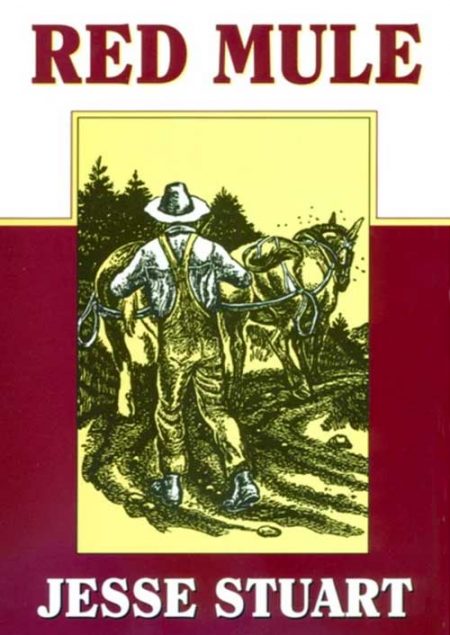 Jesse Stuart Junior Book Red Mule is the story of a friendship between a boy named Scrappie and a strange man called "Red Mule." Red Mule had worked with mules all his life and he loved them. Now tractors were coming into use and there was little work for mules. The whole town laughed. SOFTBACK By Jesse Stuart
 -
Sale!

8-Book Christmas Package
$75.00 Sale Price ($125.00 Retail)
I’ll Be Home for Christmas, by The Library of Congress True Christmas Stories From the Heart of Appalachia, compilation published by JSF in 2019 Appalachian Christmas Stories, JSF published Snow Day, by Billy Coffey The Christmas Quilt, by Thomas J. Davis The Beatinest Boy, by Jesse Stuart Missing Christmas, by Jack D. Ellis Christmas Day in the Morning, by Pearl S. Buck, illustrated by Mark Buehner -
 "God knew that it would take brave and sturdy people to survive in these beautiful but rugged hills. So He sent us His very strongest men and women." So begins the heartwarming story of Verna Mae and her father, Isom B. ""Kitteneye"" Slone, an extradordinay personal family history set in the hills around Caney Creek in Knott County, Kentucky. SOFTBACK VERSION By Verna Mae Slone
 -
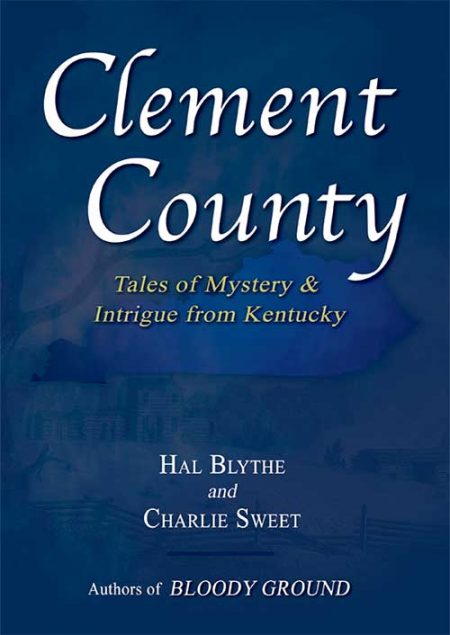 Everything from gritty reality to the supernatural rears its head in Clement County: Tales of Mystery & Intrigue from Kentucky. The authors write of the fictional southeastern Kentucky county through an anthology drawn from their over 40 years of writing together. SOFTBACK VERSION By Hal Blythe and Charlie Sweet
 -
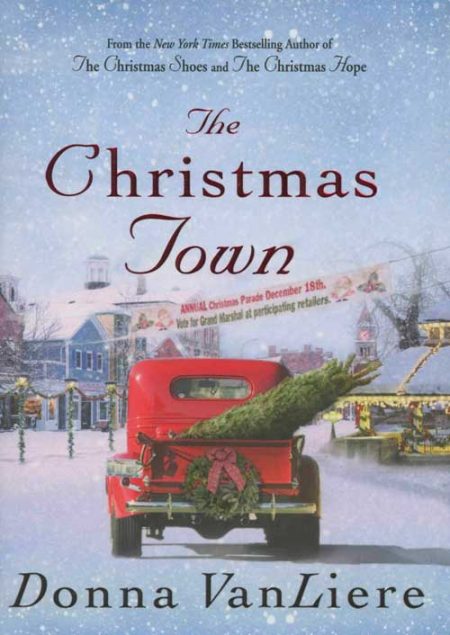 Lauren Gabriel spent many years of her childhood in foster homes, wishing her mother would come back for her and be the family she needs. Now twenty-years-old, she still longs for a place that she can truly call home. Her work as a cashier is unfulfilling, and at Christmas it’s unbearable with the songs and carols and chatter of Christmas that she hears throughout the day. By Donna VanLiere
 -
 By Ruby Miller

