-
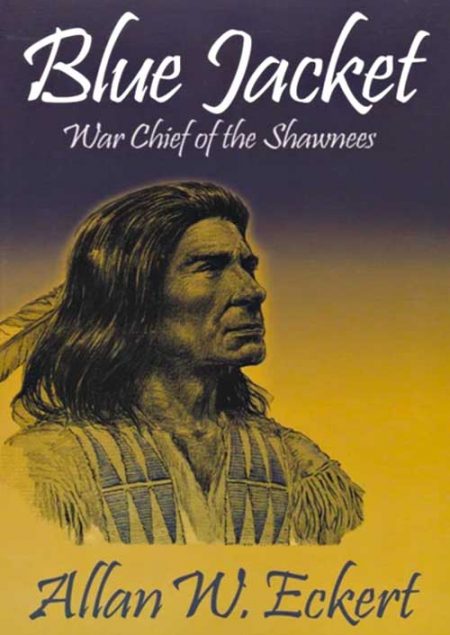 In the year 1771, a white boy named Marmaduke Van Swearingen was captured by the Shawnee Indians in what is now West Virginia, but was then the edge of the American frontier. Impressed with his bravery, he was not killed but instead was taken to Ohio where he was adopted into the tribe and given the name Blue Jacket, from the blue shirt he was wearing at the time of his capture. Eckert has taken all of the known facts of Blue Jacket's life and has woven them into a narrative of compelling interest, with a very different perspective on the way America was settled. The reader will learn what life was really like on the dangerous frontier wilderness that was West Virginia, Kentucky and Ohio before the Revolutionary War. By Allan Eckert
 -
 Taps for Private Tussie won the Thomas Jefferson Southern Award in 1943, and was a Book-of-the-Month Club selection that year, also. This tale about the Tussie family is a brimming mountain spring of hilarious fun and folklife. Yet never was a book read more eagerly to see what in the world will happen next. This tale is not just a story of poor white Southern mountaineers on relief. There is something universal about it. It reveals an attitude towards human life and its problems, found in people, places, and times that have no connection with Southern mountaineers. By Jesse Stuart
 -
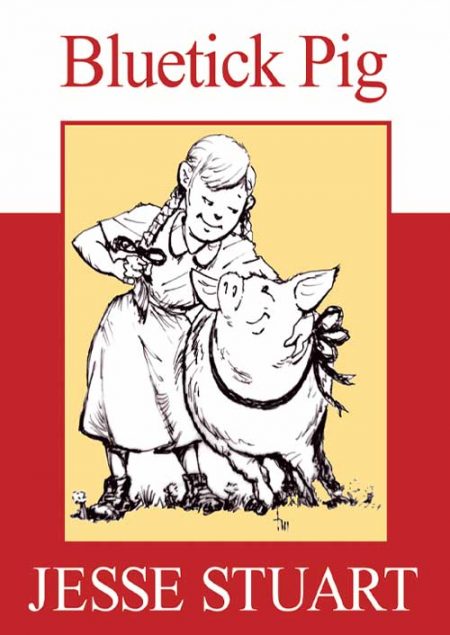 Jesse Stuart Junior Book Sarah Powell had worked a day for her neighbor. For her pay, she was given the choice of a quarter or a little pig who was the runt of the litter. By Jesse Stuart Edited by Cathy R. Roberts
 -
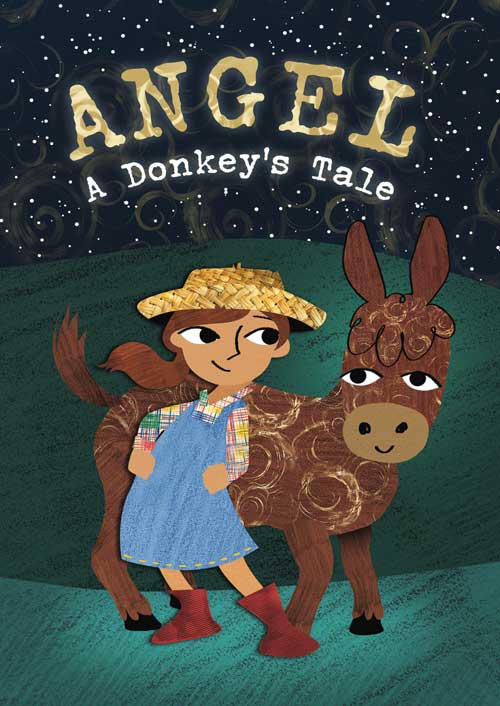 Written and created by Joan Litteral, Angel: A Donkey's Tale is a full color, fully illustrated children's book. Illustrations by Evan and Joe Kovach. HARDBACK VERSION Joan Litteral
 -
Sale!

"Nothing is impossible to a determined woman."
This quote by Louisa May Alcot adorns a beautiful tote bag available at the Jesse Stuart Foundation. This large, 100 percent cotton bag is more than 16 inches deep, and it will handle books, bottles, groceries, mail and anything else you choose to carry. The bag normally retails for $35.00. You can purchase it for $28.00 on this website. It will make a meaningful gift to the "determined woman" in your life. -
 Growing Up in the Last Small Town: A West Virginia Memoir is a humorous and poignant account of Bob Barnett, a bad student and undersized athlete coming of age in the 1950’s, but it is also the story of all of us who grew up in small towns across America between 1940 and 1960. It was a time of simple pleasures that included shedding winter coats on the first day of spring, playing baseball until dark, watching four-hour children’s matinees on Saturday, and breaking plates in the town dump, our favorite playground. It was a time when we wrote term papers, ate fish sandwiches at the Fireman’s Carnival, cheered our high school teams, and lived for soak hops and dances –a time when getting the right date for the prom was more important than the election of the president. The story is set in the unincorporated pottery town of Newell, West Virginia and captures the rhythm of life in small towns that we thought would never change. But change came quickly. Television became a staple of modern life in the 1950s offering Elvis, the evening news, and a vivid view of our changing world. School consolidations robbed the towns of their souls, supermarkets eliminated the need for corner grocery stores, and the closing of mills and factories brought an end to small towns as we knew them. The generation whose story is told in this book grew up in the last small town in America. SOFTBACK By Bob Barnett
 -

- Song of the River
- The Trail of the Hunter's Horn
- Riverboy
- Useless Dog
- The Mooneyed Hound
-
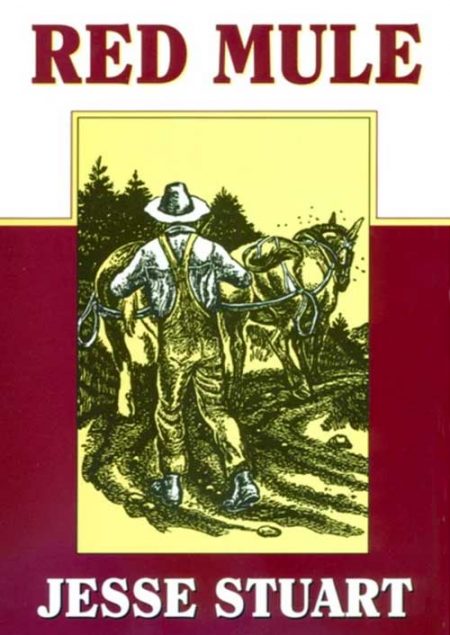 Jesse Stuart Junior Book Red Mule is the story of a friendship between a boy named Scrappie and a strange man called "Red Mule." Red Mule had worked with mules all his life and he loved them. Now tractors were coming into use and there was little work for mules. The whole town laughed. SOFTBACK By Jesse Stuart
 -
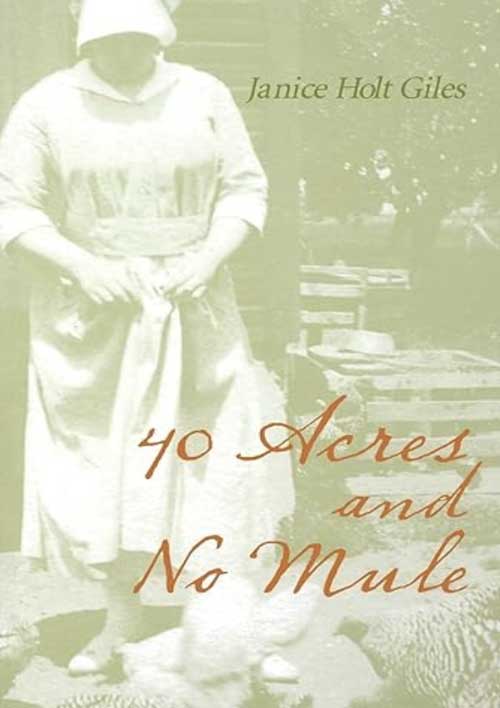 In the late 1940s, Janice and Henry Giles moved from Louisville, Kentucky, back to the Appalachian hill country where Henry had grown up and where his family had lived since the time of the Revolution. With their savings, the couple bought a ramshackle house and forty acres of land on a ridge top and set out to be farmers like Henry's forebears. To this personal account of the trials of a city woman trying to learn the ways of the country and of her neighbors, Janice Holt Giles brings the same warmth, humor, and powers of observation that characterize her novels. Enlightening and evocative, personal and universally pertinent, this description of a year of "backaches, fun, low ebbs, and high tides, and above all a year of eminent satisfaction" will be welcomed by Janice Holt Giles's many readers, old and new. Janice Holt Giles (1905-1979), author of nineteen books, lived and wrote near Knifley, Kentucky, for thirty-four years. Her biography is told in Janice Holt Giles: A Writer's Life. SOFTBACK VERSION By Janice Holt Giles
 -
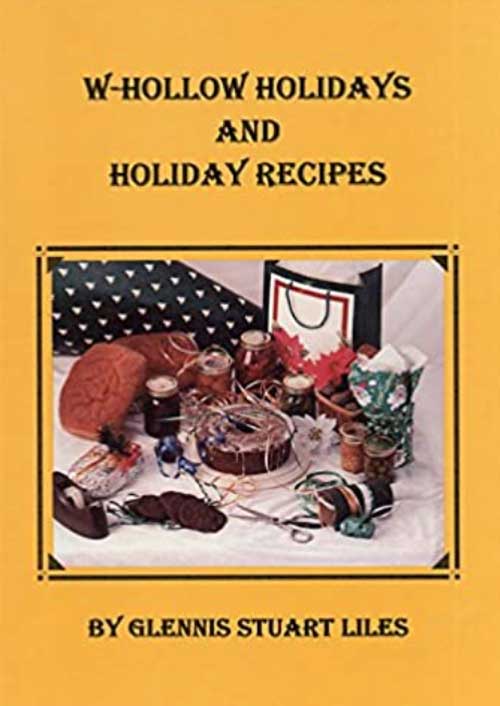 In her Introduction, Glennis Stuart Liles provides some historical background on Greenup and Greenup County and then she focuses on her parents and her family in “W-Hollow Holidays and Holiday Recipes." “My parents, Martha and Mitchell Stuart, married at Plum Grove (Greenup County) and went to house keeping in W-Hollow just over the hill from the town of Greenup. They lived there until they died in the early fifties. They, and their neighbors, grew their vegetables on the rocky hillsides, milked cows, and killed their own meat. Everyone was poor, but they did their best to make holidays special. The most important part of each holiday was the food. It was served in the dining room, on a fancy tablecloth with cloth napkins and their best silverware and china. The recipes in this book are special to the people of W-Hollow. They have been used over and over on special occasions – some for more than one-hundred-fifty years.” HARDBACK VERSION By Glennis Stuart Liles
 -
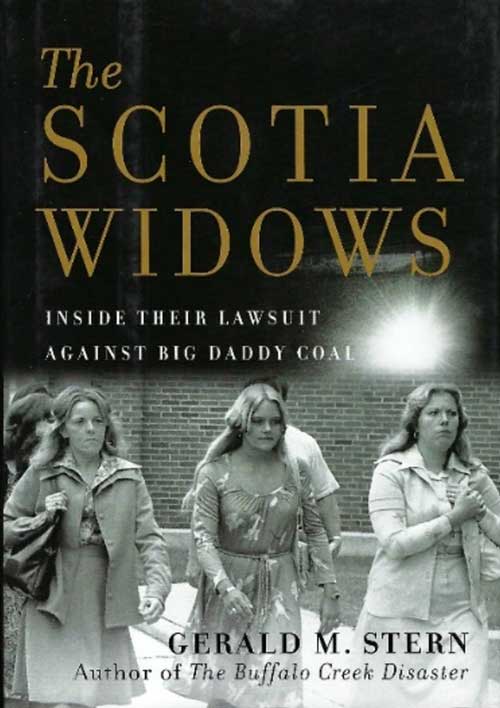 The Scotia Widows: Inside Their Lawsuit Against Big Daddy Coal On March 9, 1976, a violent explosion, fueled by high concentrations of methane gas and coal dust, ripped through the Scotia mine in the heart of Eastern Kentucky coal country. The blast killed fifteen miners who were working nearly three and a half miles underground; two days later, a second explosion took the lives of eleven rescue workers. For the miners’ surviving family members, the loss of their husbands, fathers, and sons was only the beginning of their nightmare. By Gerald M. Stern
 -
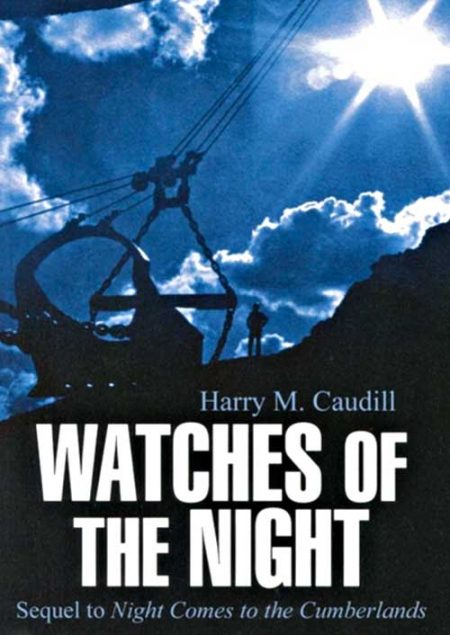 In 1963, Harry M. Caudill published his now classic account of the reckless, deliberate despoliation of the Appalachian Plateau, Night Comes to the Cumberlands. Thirteen years later, in The Watches of the Night, Caudill continued the heartbreaking story of an incredibly rich land inhabited by a grindingly poor people whose problems, despite state and local aid and an unprecedented boom in coal, had worsened: the land was being stripped more rapidly than ever; the people’s traditional relationship with the land was being uprooted, and their old customs eliminated by standardization Both a narrative history and a polemic against greed and waste, The Watches of the Night hammers at “the profligacy growing out of the persistent myth of superabundance.” The author ponders an even darker future if the cycle of boom and bust is not broken. He writes: “Americans have never understood or respected the finely textured, little-hill terrain of the Cumberland Plateau.” Neither the farmers nor the miners who followed the early pioneers saw it as a place cherish. Through decades that have lengthened to nearly two centuries the land has fought back, sometimes with savage floods and always with persistent efforts to reforest. “But now times runs out and our “inexhaustible” resources have turned finite….The Kentucky Cumberlands are many things, but most of all they are a warning.” By Harry M. Caudill

