

In the 1950s, many Appalachian families felt safer because their soldier was home from World War II. However, crime across the region did not decrease, probably because Appalachia was not enjoying the same degree of prosperity that existed in mainstream America.
In “Sunday Slaughter,” JSF editor and board member Edwina Pendarvis tells the tragic story of Anderson Adkins, a Pike County native who had gone north to work in a factory. His former wife, Elmo Adkins, was working in a defense plant in Ohio and had left their ten-year-old son in the care of her mother. Depressed about his divorce and the loss of custody of his son, Adkins went on a murder spree on Sunday, February 11, 1945, killing three people and badly wounding two others. Captured that day, he was executed for his crimes a year later. Pendarvis reports that she was “a six-month-old witness. My mother was holding me when she saw her mother shot.”
On the evening of June 27, 1949, Muriel Baldridge, a pretty, high school cheerleader, was murdered in Prestonsburg. John David Preston, a brilliant and highly respected jurist and scholar, authored the Baldridge story, and argues that, even though the community had a consuming desire for justice, “the progress of the investigation was disheartening because of numerous procedural errors.” Despite the fact that at least three persons confessed to the crime, no one was ever convicted, because of shoddy and conflicting efforts by law enforcement officials who had “no substantive experience in investigating a major crime.” The original crime scene was compromised, facts were revealed to the public that should have remained confidential, and clothing and physical evidence were returned to the Baldridge family and to one of the persons accused of the crime. Had that material remained in proper legal custody, later DNA testing might have eventually identified the murderer.
My administrative assistant Judith Kidwell’s well-researched story of the murder of Donald and Brenda-Lou Howard presents a tragic tale of a popular and well-respected young couple—just married and planning their future together—who were murdered together in a parked car on Skyline Drive in Ashland, Kentucky, on March 14, 1962.
While some murders go unsolved, and some murderers go unpunished, many murderers are apprehended, tried, and convicted because they made foolish mistakes. Such was the case in Brenda Evans’ brilliant, page-turning story of the 1985 murder of Tammy Acker in Fleming-Neon, a small community in Letcher County.
A trio of criminals who thought that “it ain’t a crime if you don’t get caught,” illegally entered the home of Dr. Roscoe Acker, killed his daughter Tammy (and thought they had killed Dr. Acker) and fled south with almost two million dollars in cash to rendezvous with their girlfriends in Ormond Beach, Florida. In a matter of days, they were apprehended because they had left behind a briefcase that contained a clear fingerprint.
The Acker murder case, which played out in headlines across Kentucky, also illustrates another weakness in America’s justice system: a few of the law enforcement officers and attorneys are criminals, too. In the Acker case, a law enforcement officer accepted $500,000 in stolen cash to hide and launder, and two high-profile Kentucky attorneys accepted hundreds of thousands of dollars—dollars stained with Tammy Acker’s blood—to defend the men who had savagely stabbed her to death. One attorney, the flamboyant Lester Burns, conspired with the three murderers to knowingly “transport, . . .receive, conceal, store, barter, dispose of stolen money.” After his arrest, Burns claimed that he would “ride the ship of truth . . . to the shores of freedom.” Instead, he was imprisoned for three years and disbarred for life.
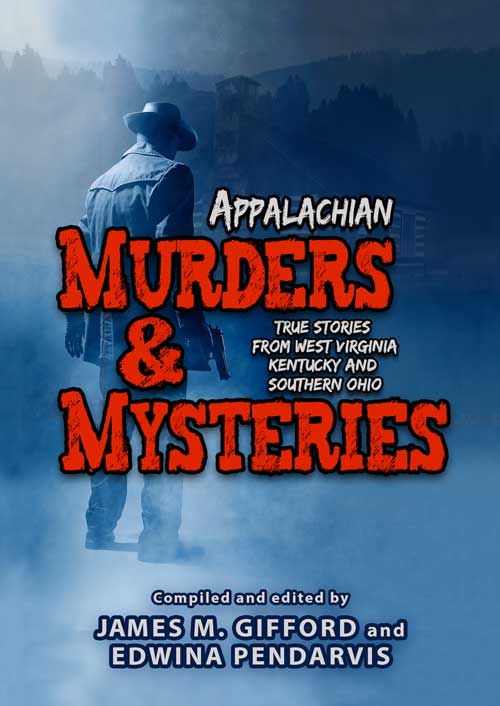
In the 23 stories in this book, a nun is murdered; a wealthy socialite is murdered; children are murdered; high school and college students are murdered; a young married couple is murdered in a parked car; an old person is murdered in a home invasion. Jealous husbands commit murders in this book and so do serial killers. Some murderers are quickly brought to justice, and others escape capture. These murders span two centuries. Seventeen authors wrote stories that held a special fascination for them. I think they will fascinate our readers, too.
“Appalachian Murders & Mysteries,” like other regional classics, is available at the JSF Bookstore, 4440 13th Street in Ashland or by calling 606-326-1667.
By James M. Gifford
JSF CEO & Senior Editor
In the 1950s, many Appalachian families felt safer because their soldier was home from World War II. However, crime across the region did not decrease, probably because Appalachia was not enjoying the same degree of prosperity that existed in mainstream America.
In “Sunday Slaughter,” JSF editor and board member Edwina Pendarvis tells the tragic story of Anderson Adkins, a Pike County native who had gone north to work in a factory. His former wife, Elmo Adkins, was working in a defense plant in Ohio and had left their ten-year-old son in the care of her mother. Depressed about his divorce and the loss of custody of his son, Adkins went on a murder spree on Sunday, February 11, 1945, killing three people and badly wounding two others. Captured that day, he was executed for his crimes a year later. Pendarvis reports that she was “a six-month-old witness. My mother was holding me when she saw her mother shot.”
On the evening of June 27, 1949, Muriel Baldridge, a pretty, high school cheerleader, was murdered in Prestonsburg. John David Preston, a brilliant and highly respected jurist and scholar, authored the Baldridge story, and argues that, even though the community had a consuming desire for justice, “the progress of the investigation was disheartening because of numerous procedural errors.” Despite the fact that at least three persons confessed to the crime, no one was ever convicted, because of shoddy and conflicting efforts by law enforcement officials who had “no substantive experience in investigating a major crime.” The original crime scene was compromised, facts were revealed to the public that should have remained confidential, and clothing and physical evidence were returned to the Baldridge family and to one of the persons accused of the crime. Had that material remained in proper legal custody, later DNA testing might have eventually identified the murderer.
My administrative assistant Judith Kidwell’s well-researched story of the murder of Donald and Brenda-Lou Howard presents a tragic tale of a popular and well-respected young couple—just married and planning their future together—who were murdered together in a parked car on Skyline Drive in Ashland, Kentucky, on March 14, 1962.
While some murders go unsolved, and some murderers go unpunished, many murderers are apprehended, tried, and convicted because they made foolish mistakes. Such was the case in Brenda Evans’ brilliant, page-turning story of the 1985 murder of Tammy Acker in Fleming-Neon, a small community in Letcher County.
A trio of criminals who thought that “it ain’t a crime if you don’t get caught,” illegally entered the home of Dr. Roscoe Acker, killed his daughter Tammy (and thought they had killed Dr. Acker) and fled south with almost two million dollars in cash to rendezvous with their girlfriends in Ormond Beach, Florida. In a matter of days, they were apprehended because they had left behind a briefcase that contained a clear fingerprint.
The Acker murder case, which played out in headlines across Kentucky, also illustrates another weakness in America’s justice system: a few of the law enforcement officers and attorneys are criminals, too. In the Acker case, a law enforcement officer accepted $500,000 in stolen cash to hide and launder, and two high-profile Kentucky attorneys accepted hundreds of thousands of dollars—dollars stained with Tammy Acker’s blood—to defend the men who had savagely stabbed her to death. One attorney, the flamboyant Lester Burns, conspired with the three murderers to knowingly “transport, . . .receive, conceal, store, barter, dispose of stolen money.” After his arrest, Burns claimed that he would “ride the ship of truth . . . to the shores of freedom.” Instead, he was imprisoned for three years and disbarred for life.
In the 23 stories in this book, a nun is murdered; a wealthy socialite is murdered; children are murdered; high school and college students are murdered; a young married couple is murdered in a parked car; an old person is murdered in a home invasion. Jealous husbands commit murders in this book and so do serial killers. Some murderers are quickly brought to justice, and others escape capture. These murders span two centuries. Seventeen authors wrote stories that held a special fascination for them. I think they will fascinate our readers, too.
“Appalachian Murders & Mysteries,” like other regional classics, is available at the JSF Bookstore, 4440 13th Street in Ashland or by calling 606-326-1667.
By James M. Gifford
JSF CEO & Senior Editor


